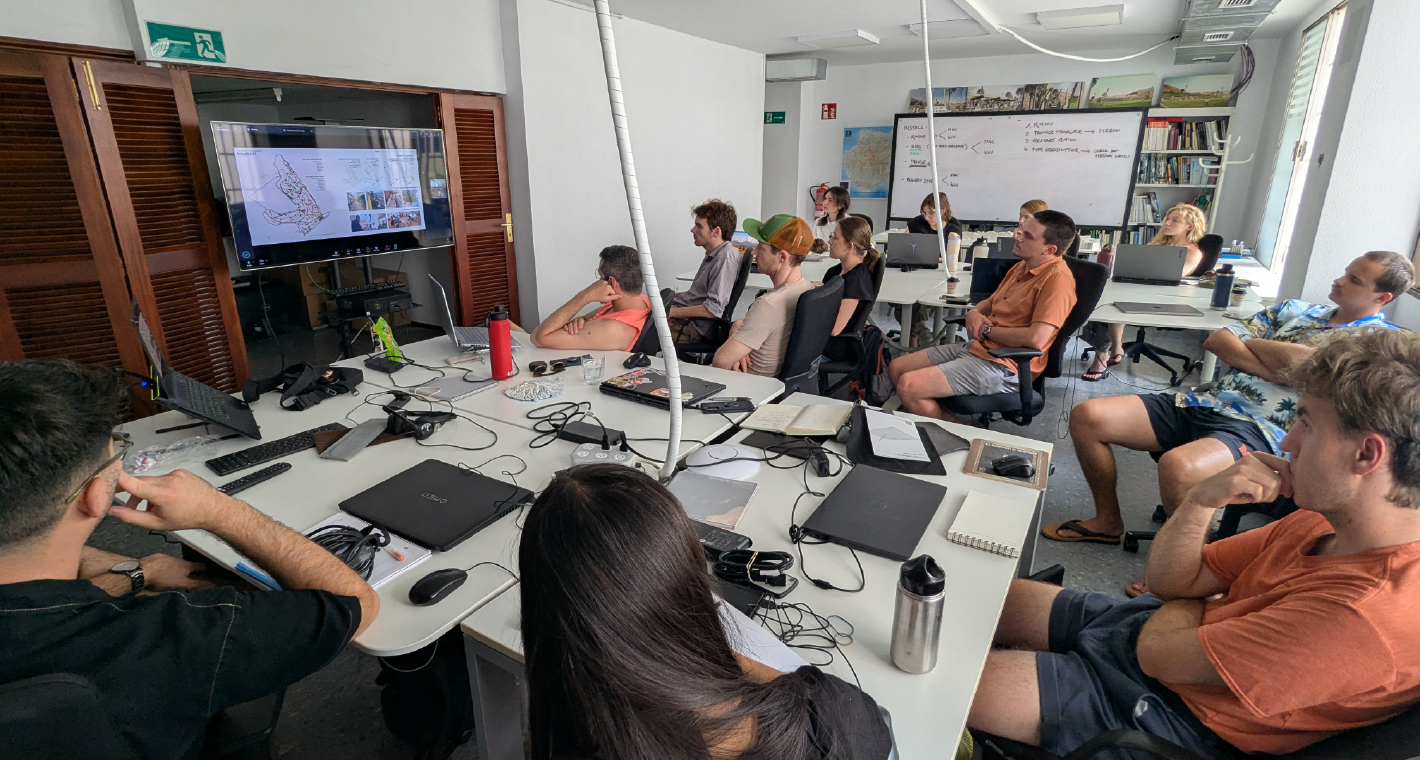
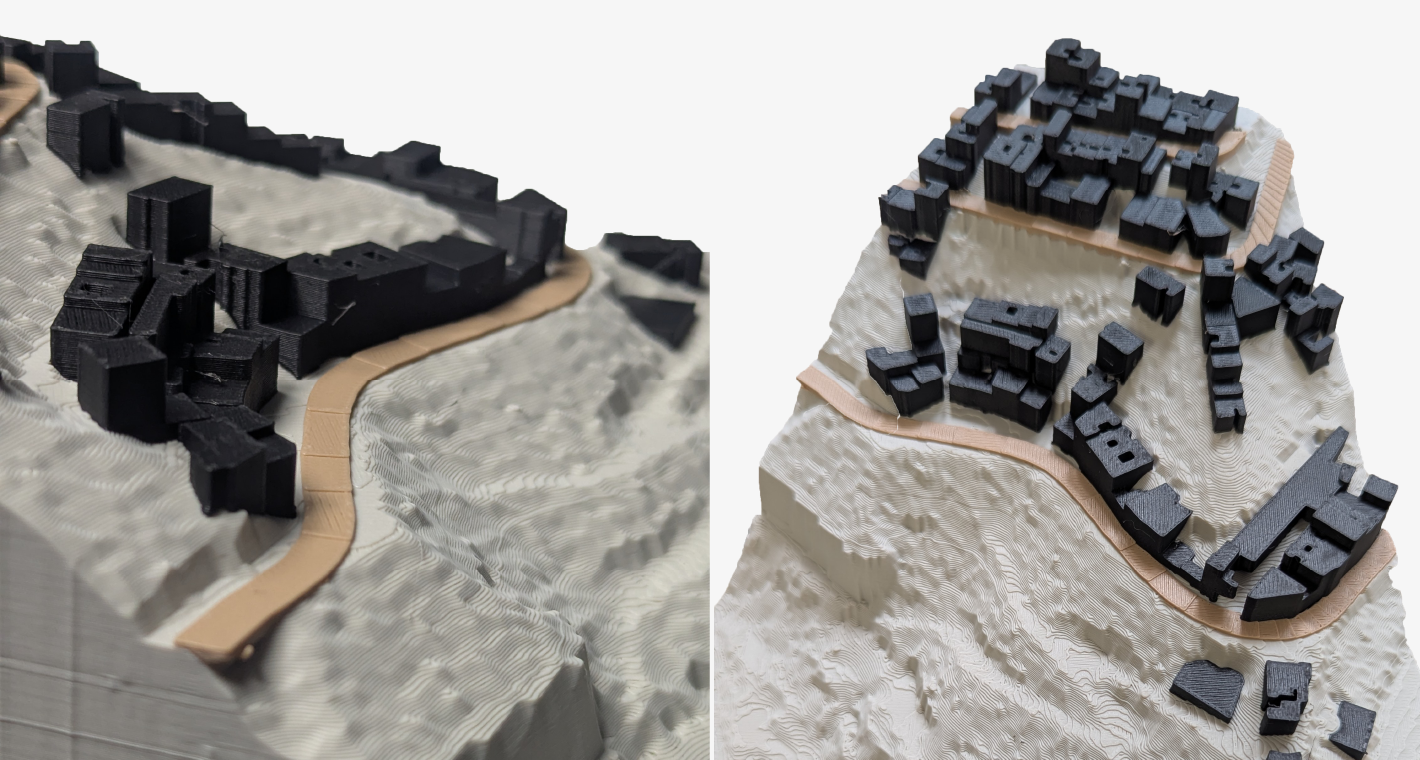
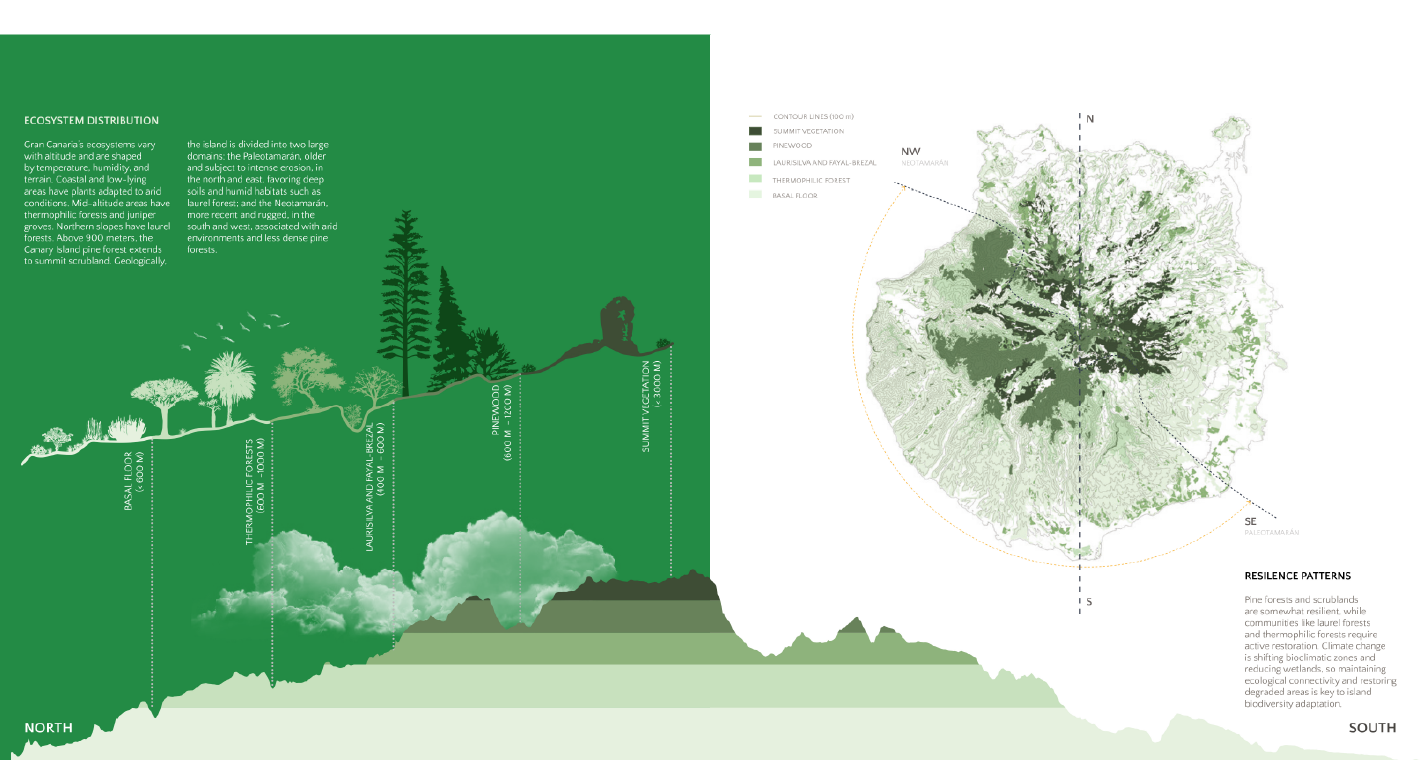
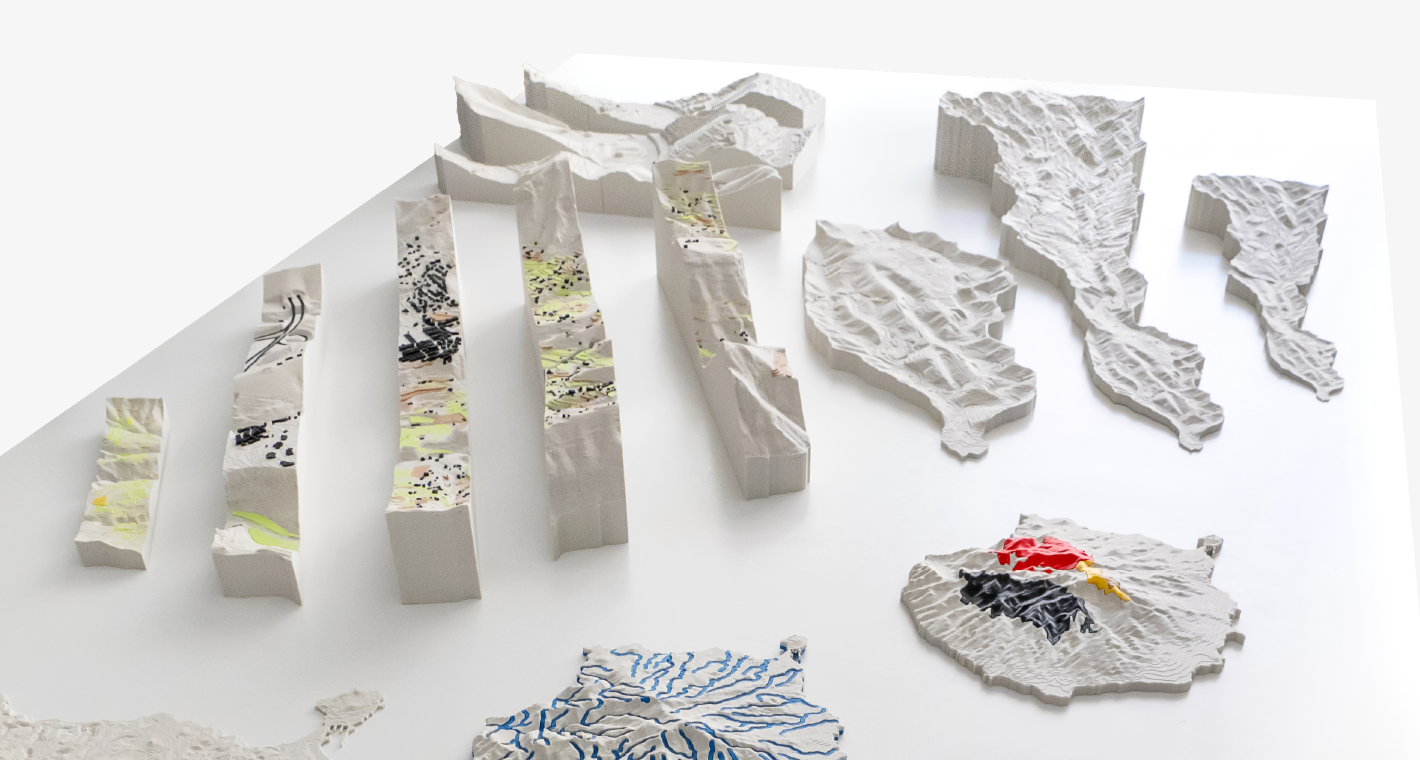
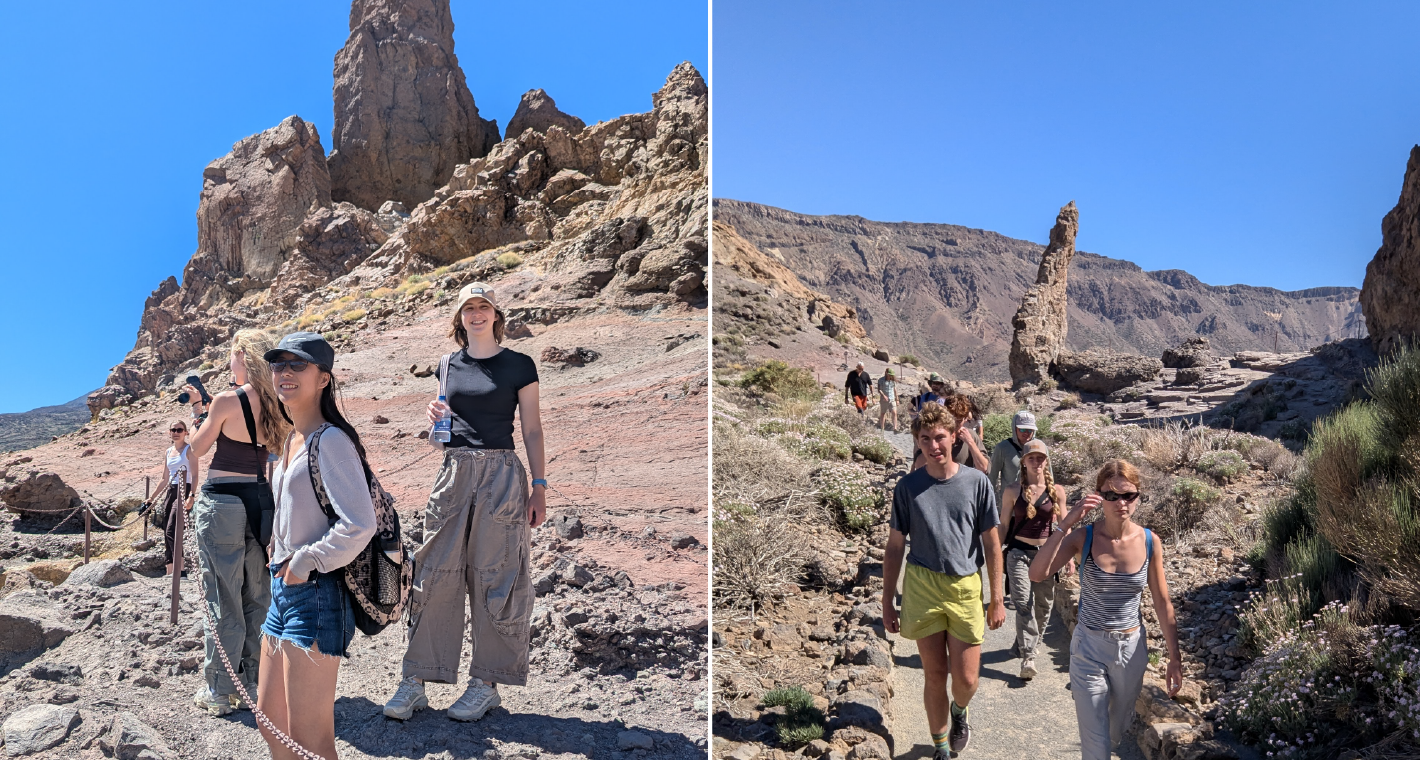
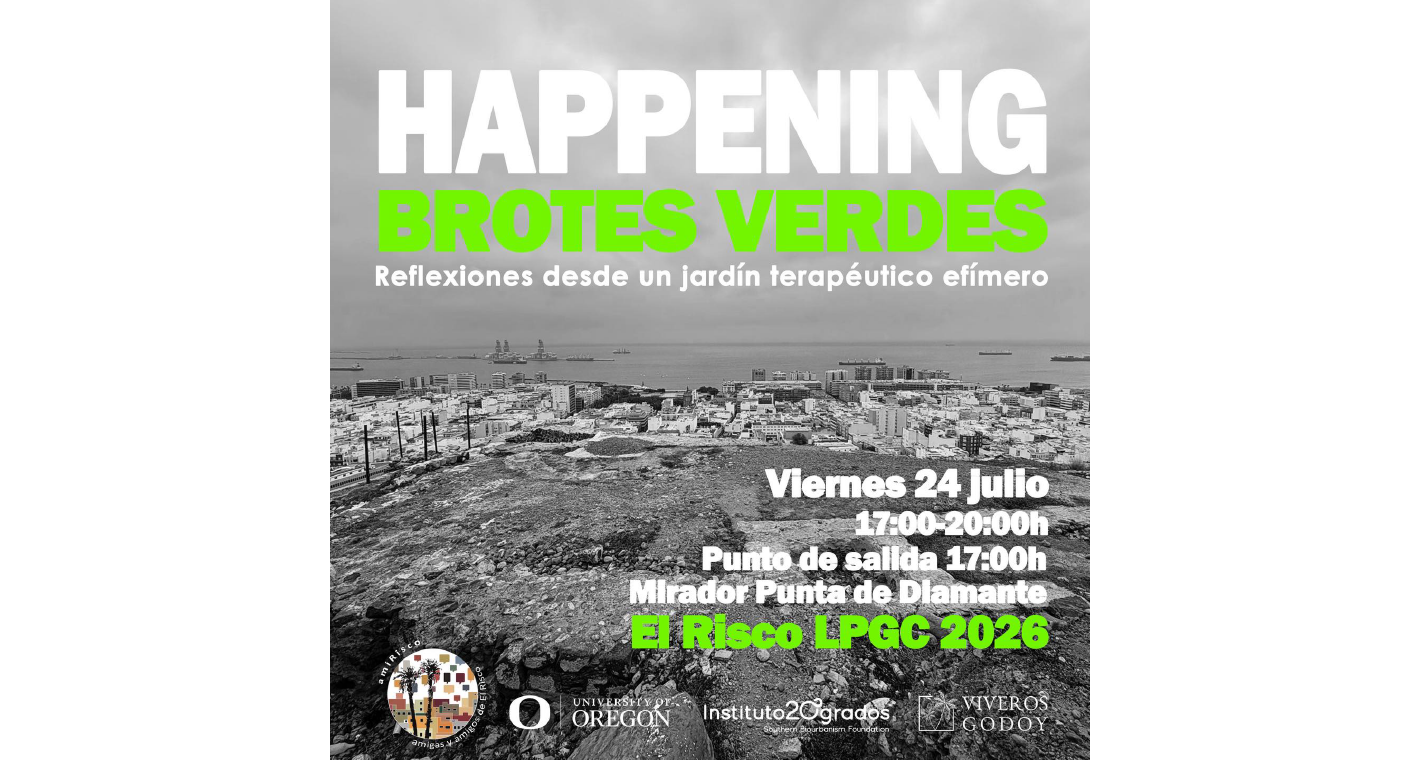
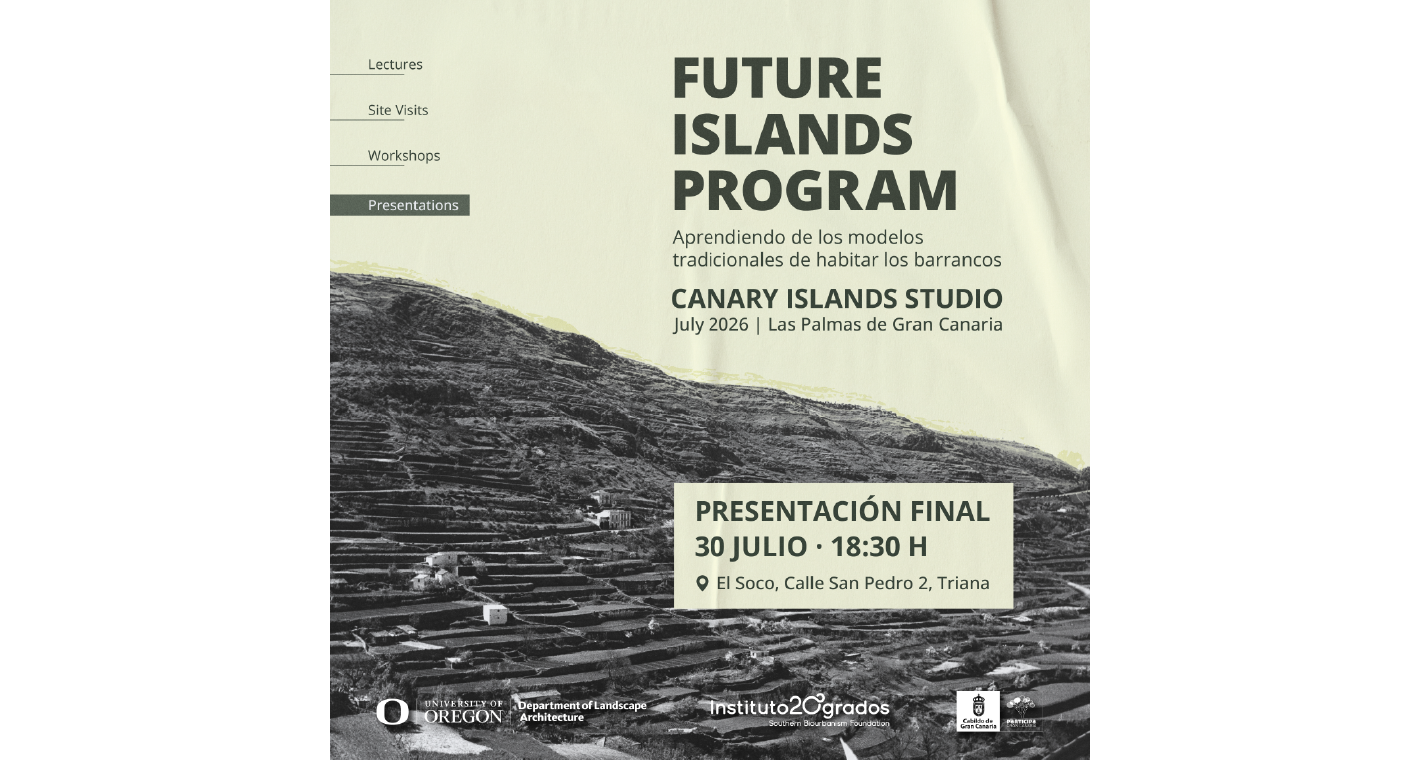
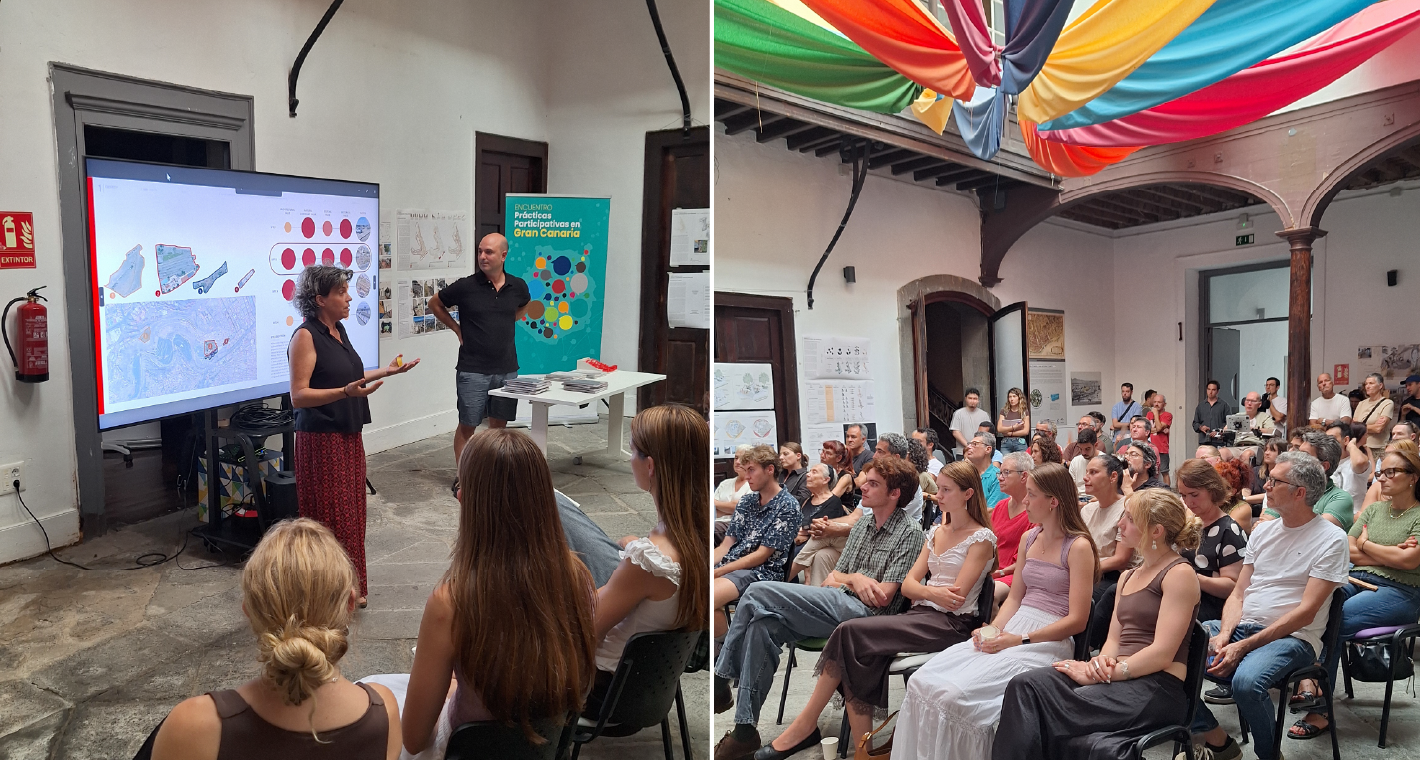

The Canary Island Studio is a six-week program led by Ignacio López Busón, program director, in collaboration with Juan Palop-Casado, president of the Instituto20grados Foundation. The workshop takes place in the Canary Islands, where fifteen students from the University of Oregon’s Master of Landscape Architecture program undertake a research project combining fieldwork with a series of lectures and interdisciplinary exchanges.
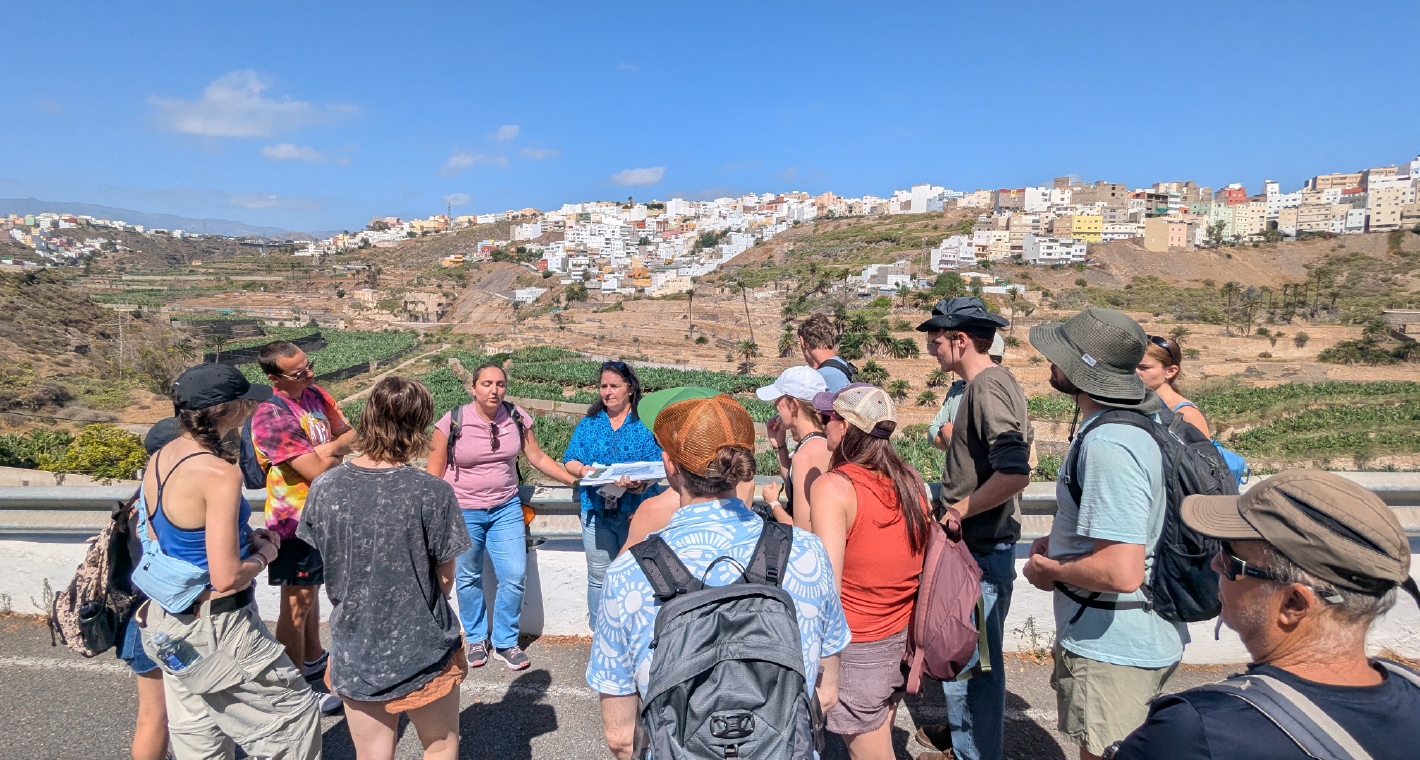
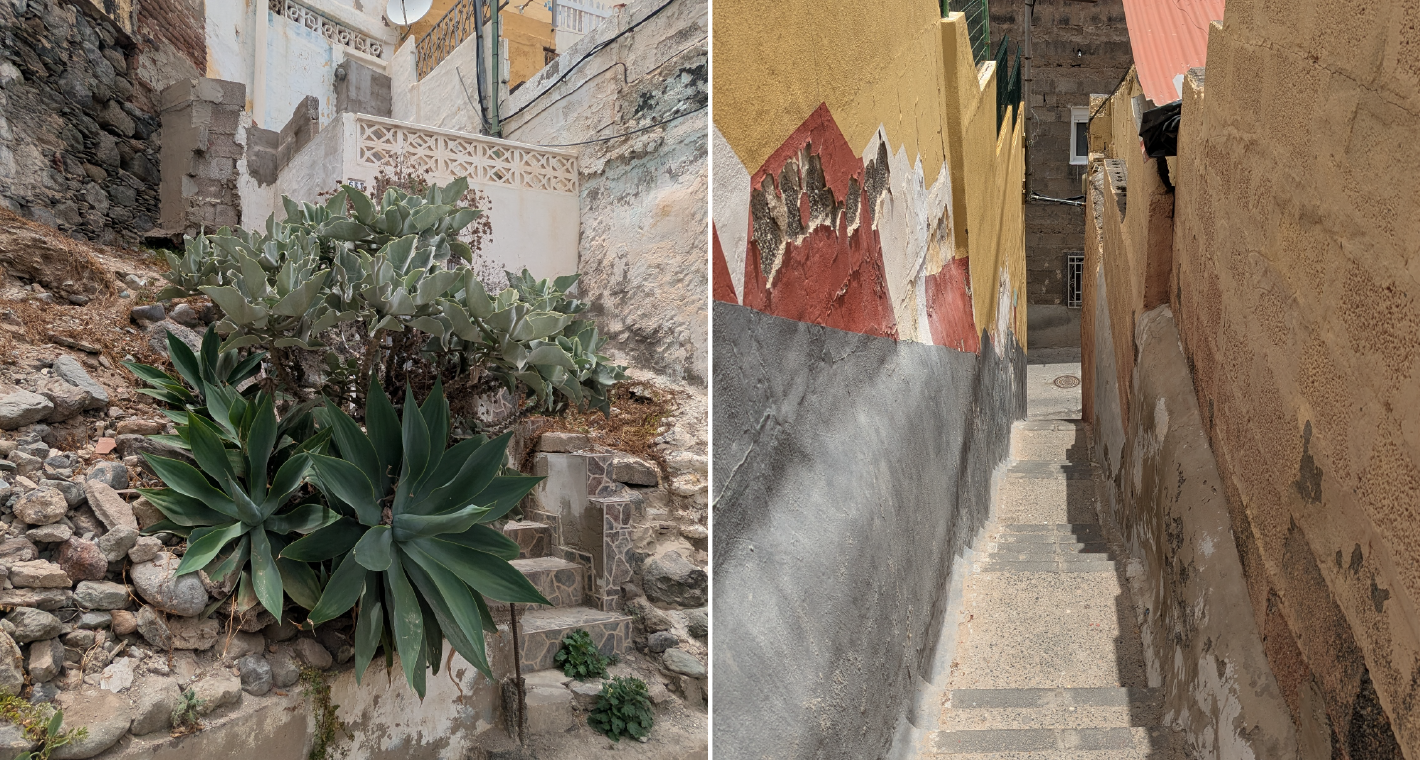
During their on-site research, the students are accompanied by geographers, civil engineers, environmental specialists, urban planners, experts in governance and citizen participation, and local hikers. The program also encourages direct engagement with local communities, allowing students to develop a deeper understanding of the social, environmental, and territorial realities of the islands.
In line with the vision and mission of the Instituto20grados Foundation, the University of Oregon’s Future Islands program focuses on arid and semi-arid territories that are particularly vulnerable to the climate crisis, including medium-sized islands. The program explores strategies for climate mitigation and adaptation, addressing one of the most significant challenges facing humanity today.
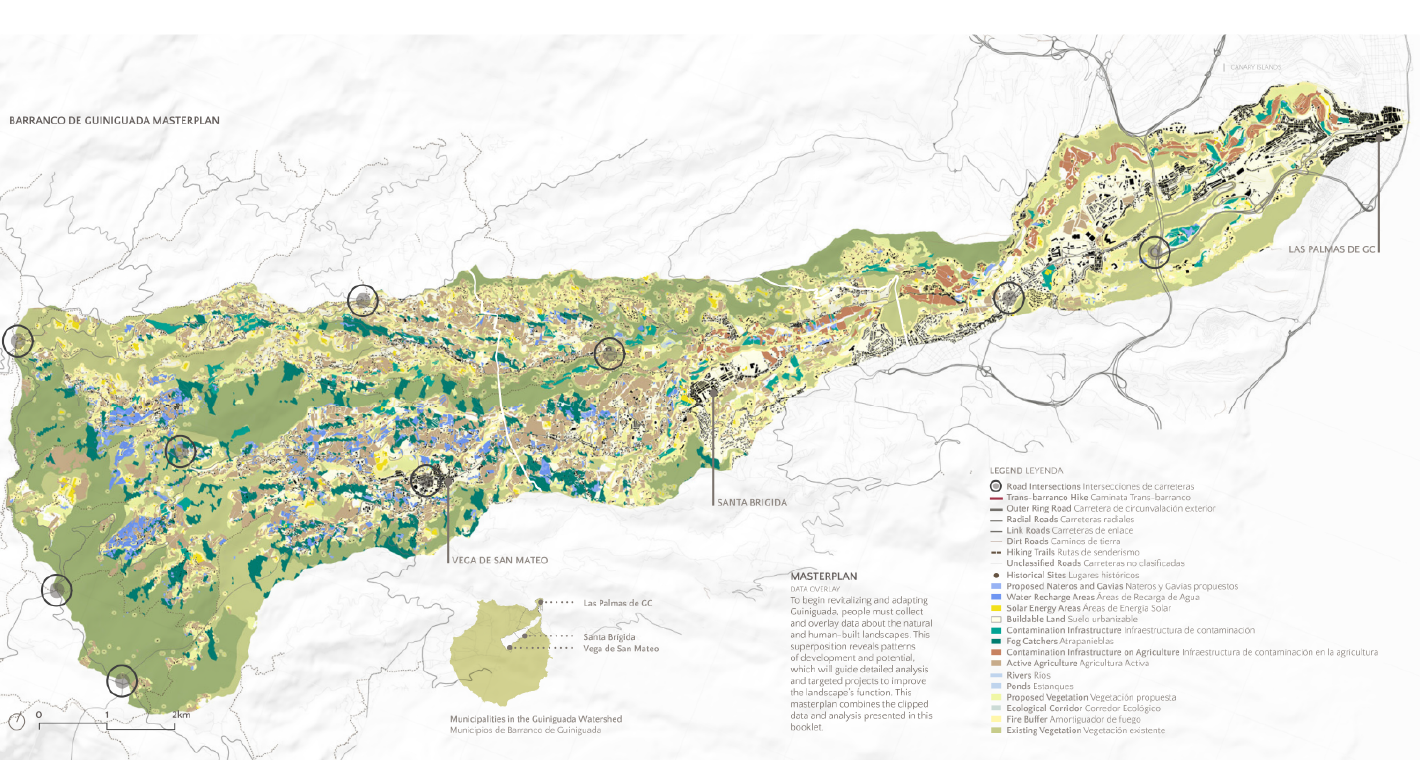
The Department of Landscape Architecture at the University of Oregon and the Instituto20grados Foundation share a bioregional perspective, approaching territories according to ecosystem parameters rather than administrative boundaries. From this perspective, the ravines studied during the workshop are understood as continuous and autonomous territorial systems whose ecological and hydrological dynamics extend beyond the boundaries of the municipalities they cross.
This initiative, in which an entire class relocates to the Canary Islands for six weeks, will take place annually as an integral part of the academic curriculum of the University of Oregon’s Master of Landscape Architecture program. This long-term commitment establishes the Canary Islands as a recurring field laboratory where successive cohorts of students can engage directly with the territory, its communities, and its environmental challenges.