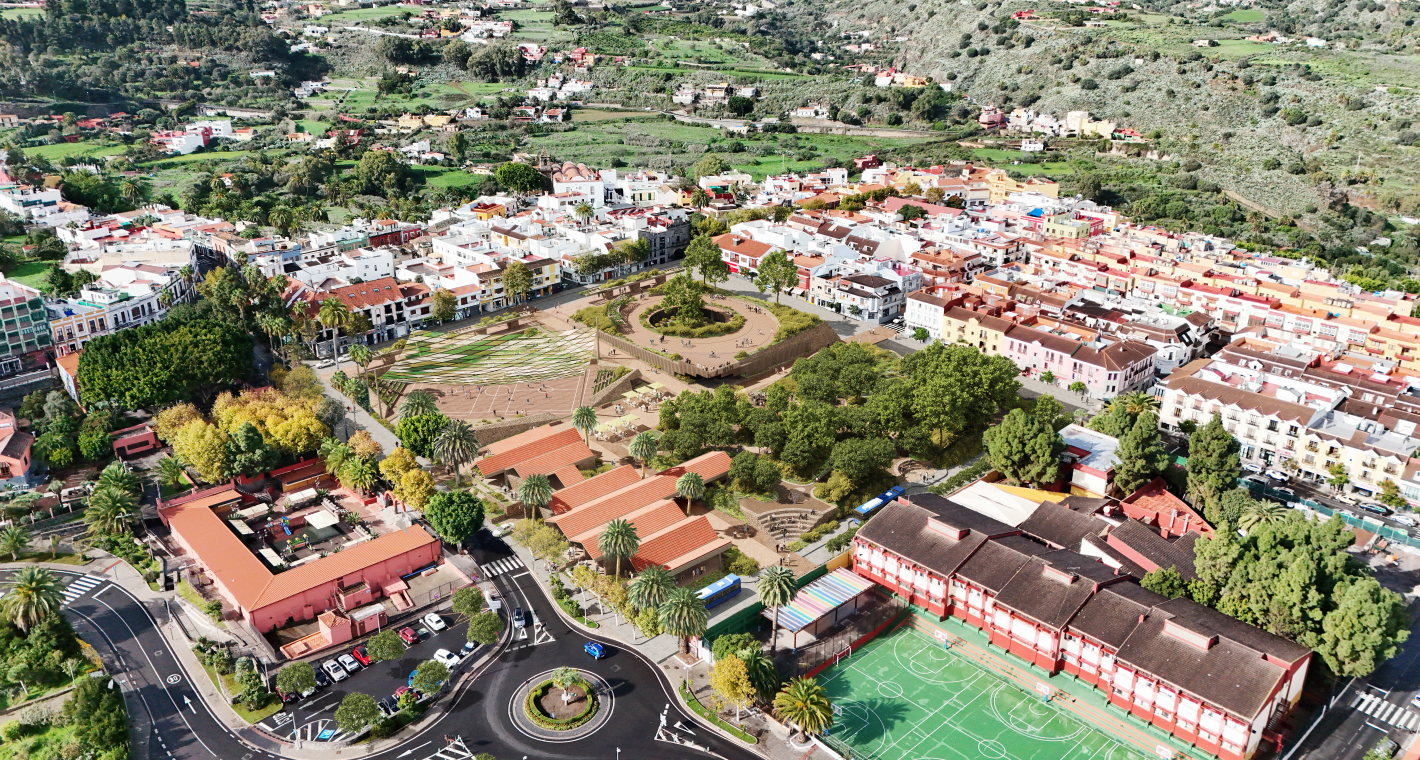


The residents of Santa Brígida have spent more than twenty-six years watching as the town centre remains occupied by a half-built ruin—once intended to be a shopping mall but halted by the courts for being illegal. Since then, younger residents have never known anything other than this “black hole,” which has hindered the town’s social, cultural, and economic development.
In a demonstration of political, urban, and democratic leadership, the governing group proposes a participatory process in which residents, technical experts, and the local government collaborate to create a shared, inspiring, and feasible urban plan for the future.
The participatory process includes three distinct yet interconnected phases. The first phase involved gathering information, during which several questions were posed. The next phase is a collective analysis and contextualisation of the data to develop a diagnosis. During this stage, technical teams worked in parallel, providing an analysis of identity and urban scale, which helped to frame the discussion within the local and spatial context.
The third phase is often missing in conventional citizen consultation processes and can be summed up as “taking into action”. A pre-master plan for the future Plaza de la Villa was developed in this phase.
Six months after the participatory process began, the work was presented to a packed house at the Centro Cultural de la Villa. Citizen participation oriented to action was the solution.